
Michael Mount
Great job good price what more can I say. Happy to recommend Tom after his work for me here in Chestfield Whitstable.

Old-school three-coat methods for period and listed homes
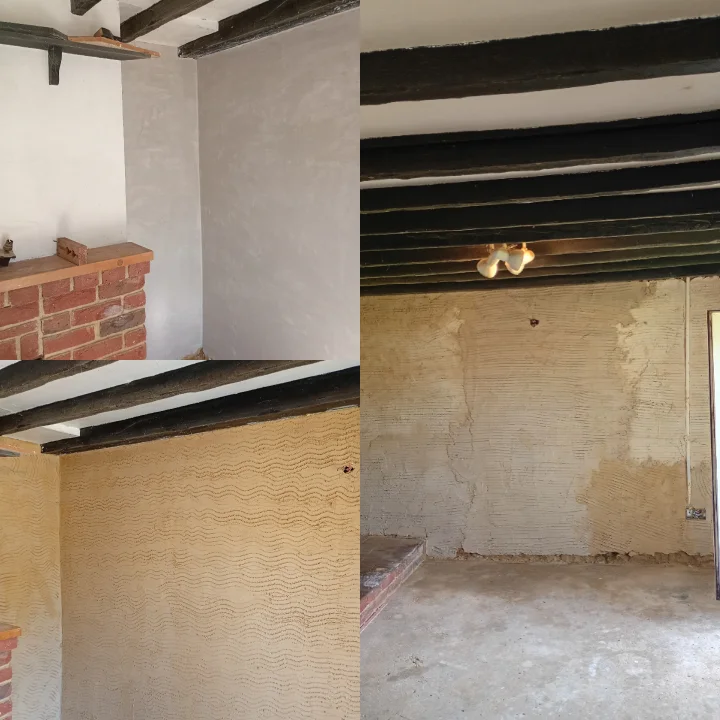
TG Specialist Plastering carries out traditional lime plastering across East Kent using old-school three-coat methods, including fixing new laths. Lime lets period walls breathe, which is essential for older and listed buildings where modern gypsum causes damp problems. Each lime coat needs roughly 7 to 10 days to cure depending on the weather, so timescales are planned honestly. Quotes are free.
Period properties need lime. It is softer and breathable, moving with the building and letting moisture escape rather than trapping it behind a hard modern skin. Using gypsum or cement on an old wall is one of the most common causes of damp in period homes, which is why conservation work always comes back to traditional materials.
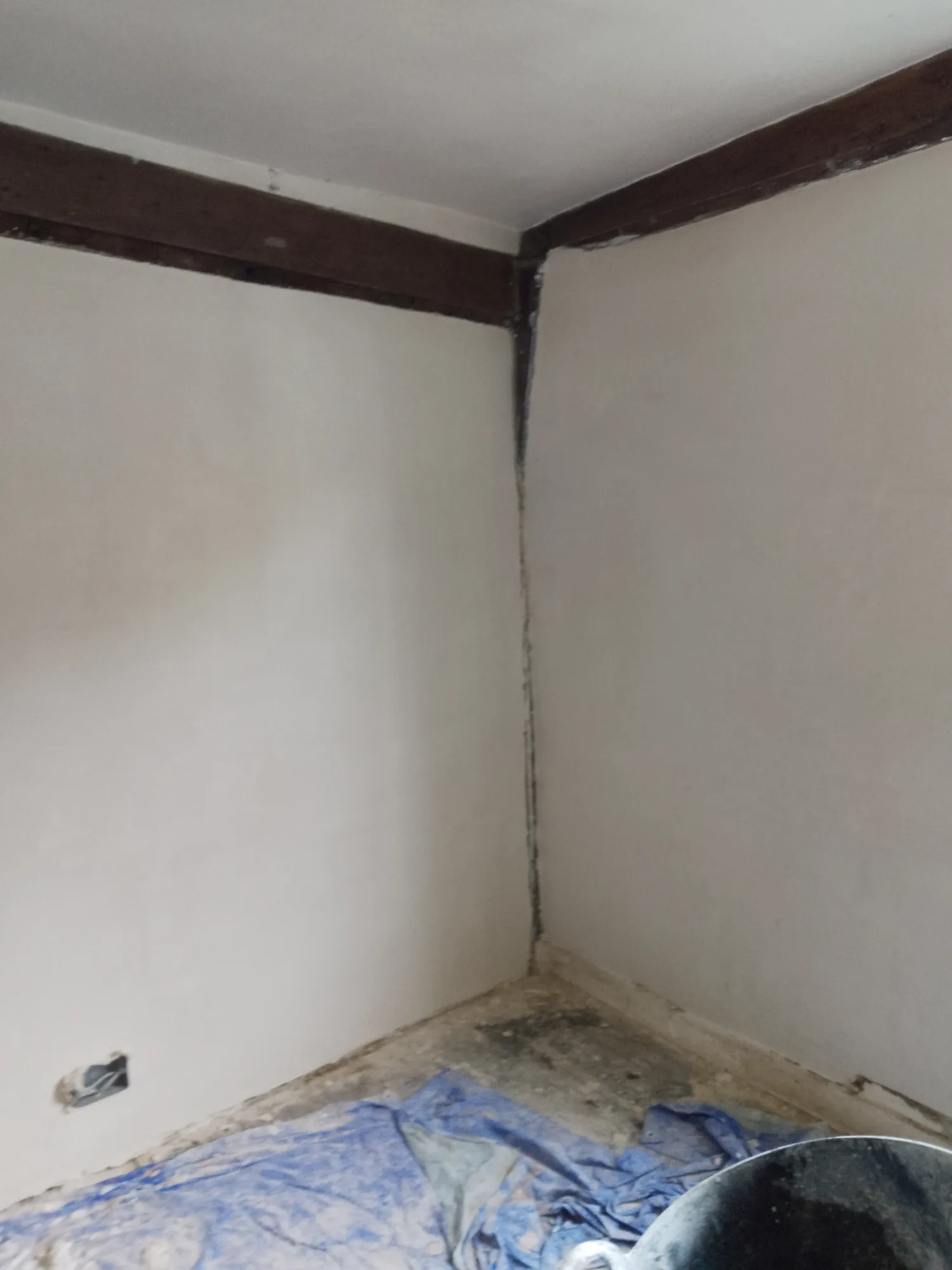
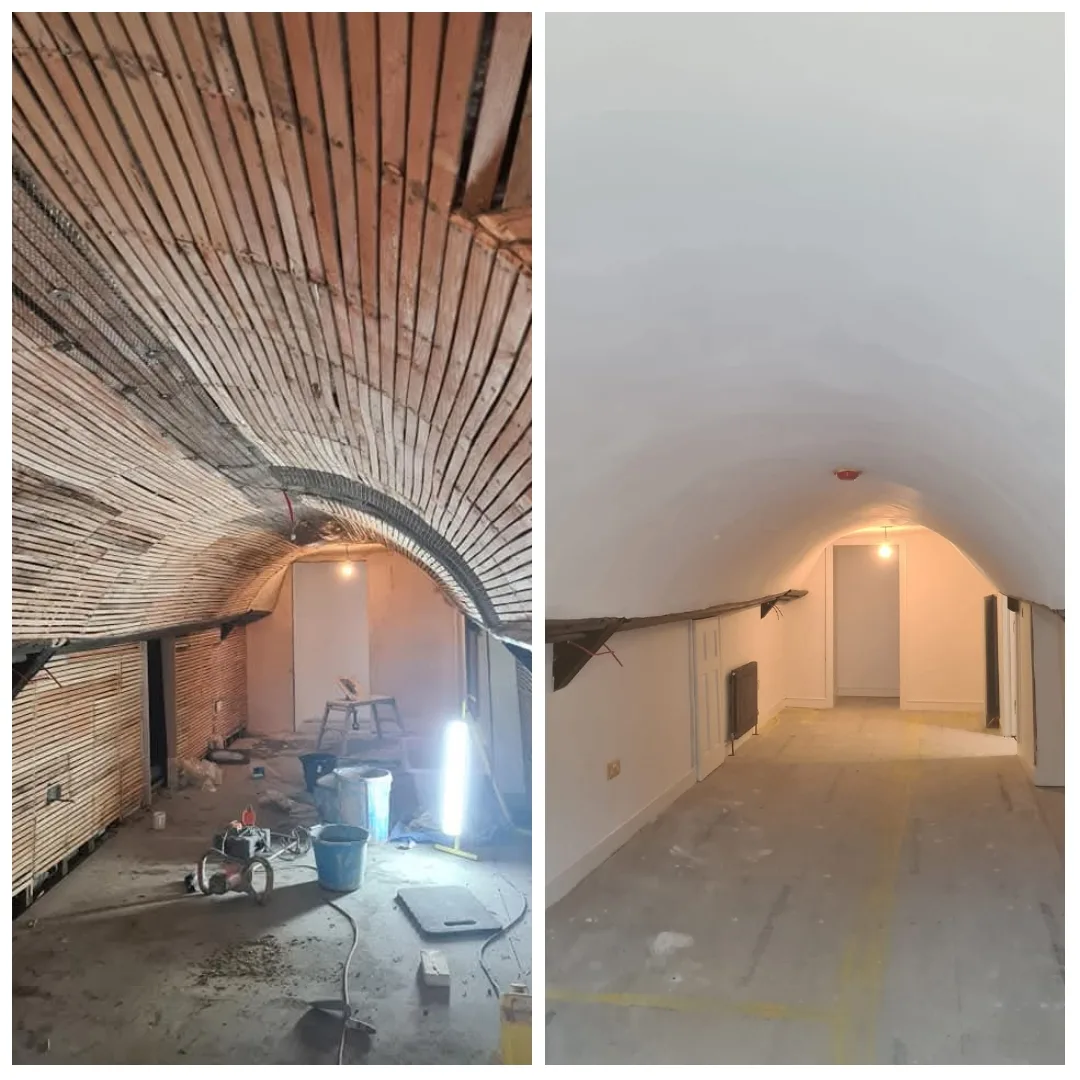
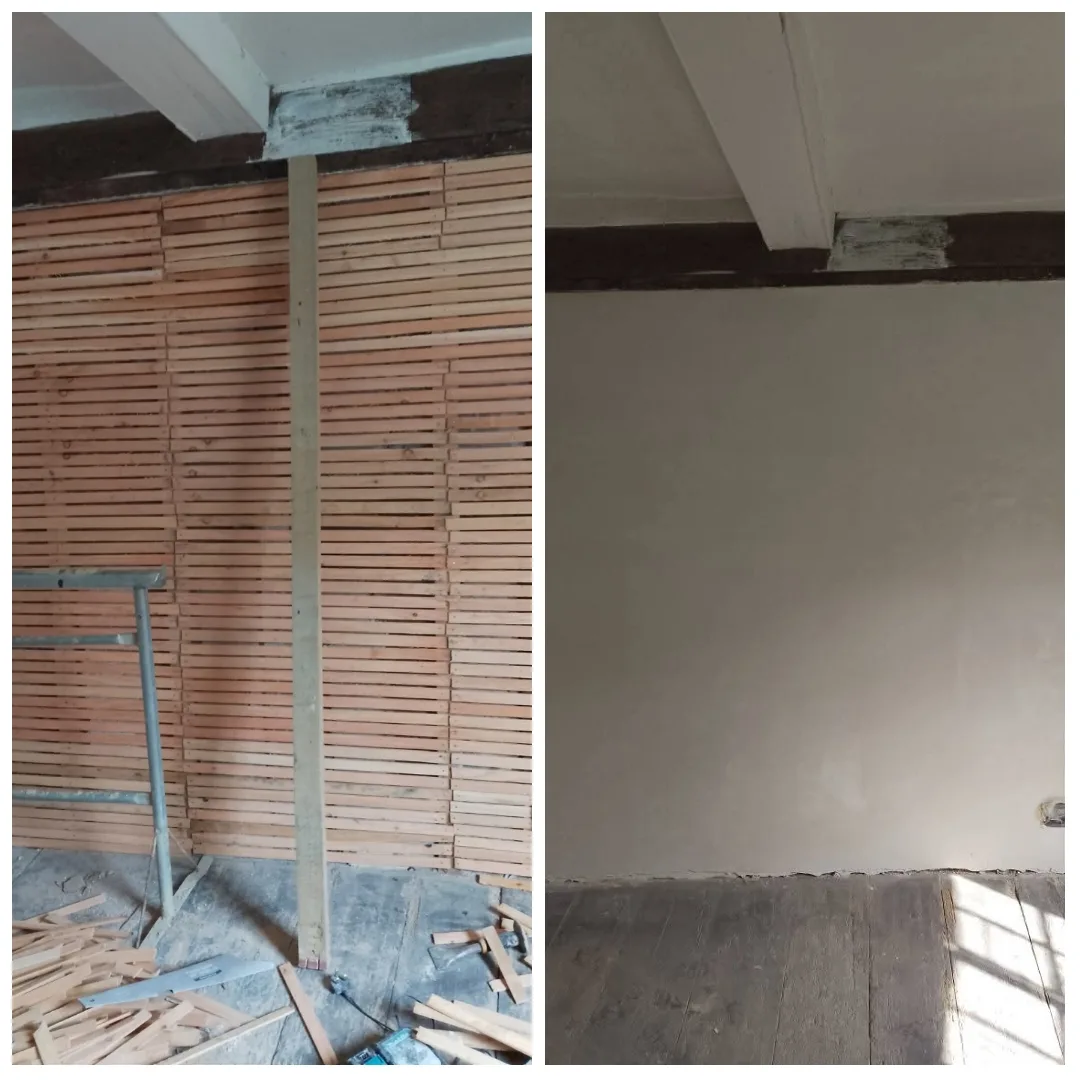
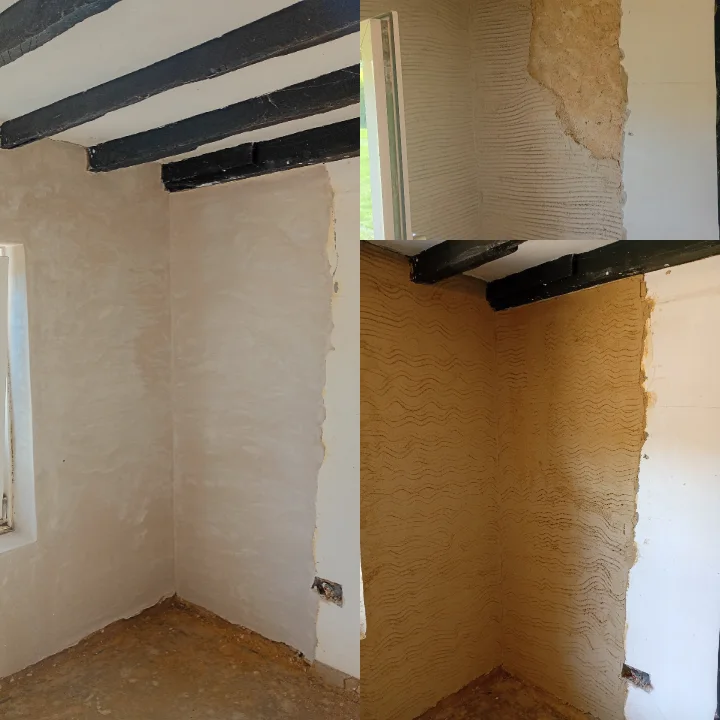
Lime plastering is Tom's passion. The work follows the old methods: new laths fixed where the originals have failed, then a full three-coat build-up of lime plaster, each coat given the time it needs to cure properly. Depending on the weather that is roughly 7 to 10 days per coat, and rushing it is never an option.
From barrel-vaulted lath ceilings to timber-framed cottage walls, restoration work is about keeping as much original fabric as possible and repairing like-for-like. The result looks right because it is right: the gentle undulation of a hand-finished lime wall simply cannot be faked with modern board and skim.
Lime rendering is available for older exteriors too, keeping solid-wall properties breathable while protecting them from the weather. If you are unsure what your walls need, Tom will take a look and give you an honest recommendation and a free quote.
Michael Mount
Great job good price what more can I say. Happy to recommend Tom after his work for me here in Chestfield Whitstable.
Gianbruno Spena
We're based in Canterbury and were looking for a plasterer to repair several small and big cracks throughout our home on our ceiling and walls. Tom came round with Mark and did a fantastic job.They took the time to properly rake out and repair the cracks and surrounding wall rather than just patching over them, and the finish looks incredible high quality. They were also extremely tidy and left the house very clean.Really friendly, professional guys and a pleasure to deal with. Couldn't recommend them enough. Thanks again!
S. Carriles
We recently had Tom and Mark carry out extensive plastering repairs throughout several rooms in our house. And we couldn’t be happier with the results.They were professional, knowledgeable and clearly took pride in doing the job properly. They opened up the cracks right back to the brickwork and reinforced the affected areas with flexible tape and new plaster.They maintained a very high standard throughout, the finish looks excellent. They also cleaned up thoroughly before leaving!We would highly recommend Tom and Mark to anyone looking for skilled, reliable plasterers who take the time to do the job right.
Penny White
Tom and his colleague did a great job for us - great communication - precision workmanship at a reasonable price - also they left our bungalow spotless
Toni Litten
I recently had some plastering work done and I couldn’t be happier with the result. From start to finish, Tom and Mark were professional, reliable, and clearly took great pride in their work. They arrived on time, kept everything tidy, and made sure to protect surrounding areas before starting.The quality of the plastering is excellent, the walls are perfectly smooth and the finish is flawless. You can really see the attention to detail. My hall, stairs and landing looks completely transformed.They were also friendly, respectful, and happy to answer any questions throughout the process.What also stood out was how tidy they were. Once they finished the job, they made sure everything was cleaned up and left the place spotless, which was really appreciated.It’s not always easy to find tradespeople you can fully trust, but I would absolutely recommend TG Specialist Plastering to anyone needing plastering work done.
ian trewinnard
Tom turned up nice and early, he got straight to work, and done a fantastic job, cleaned up any mess, and was very reasonably priced, would recommend and use again
Steve Archer
Tom was very professional, meticulous, and knowledgeable. The room was left spotlessly clean. Very happy with the finish, will definitely use Tom again.
Jennifer Ingle
Prompt efficient did a great job and left the room clean and tidy. Excellent service would definitely use again 5*
Ross Harland
I had a pleasant experience, he was clean and tidy and done a really good job
Karl Anderson
Tom did a splendid job. Plastering is a messy job but not with Tom and the finish was like glass. Highly recommend
Richelle Burrowes
I recently contracted Tom for the plastering at my gym and the results are outstanding.With the bright lighting in the gym the walls needed to be flawless and Tom nailed it!! He plastered where doorways once were and you honestly can't tell. If you need a high quality job doing either domestically or commercially I can't recommend him enough. I wish I got better pictures in the process. He was efficient and professional. Thank you Tom.
Nicky Warren
Tom & Mark plastered bathroom, excellent job from start to finish. They made sure my hall carpets were covered in plastic. Cleaned up at the end of the job. Highly recommend and will definitely have Tom back to do more plastering in our home.
Patricia Preston
I truly highly recommend Tom Goldfinch :-TG Specialist Plastering ⭐️⭐️⭐️⭐️⭐️PLUS. I sent Tom a text message with photos of damaged plasterboard hole in my lounge, due radiator pipe leak.2 weeks previously. Tom came back to me straight away with a quote .Which I was very pleased with the cost. Tom arranged to come the very next late afternoonTom is a true gentleman is very polite. Also making sure the area of work was well protected. And also explaining the amount of time it will take to dry out with out heating on over this area Tom was 100% right. Many thanks again Tom for your speedy professional plastering work
Alex Lewis
Tom is really good. Clean & tidy, a good job, quick, and the right price. Job was to remove a crumbling plaster wall, replace with new plasterboard and replaster. Done in a day, all rubbish gone.
Luke Sayer
Tom did a great job sorting out our walls around our door frames after we had new doors put in.
Kathryn Rall
Tom was punctual, precise and tidy. He did an excellent job skimming two aertex ceilings and overboarding and plastering two other lath and plaster ceilings that had started to sag - He was very knowledgeable about how best to solve the problem. He also quickly fitted in some unplanned plastering, again doing a super job.
Kornelia Jumel
We had a leak from our shower which caused a mark on the living room ceiling. Tom did an excellent job, first removing a square of the ceiling so we could identify the source of the leak and after that was fixed he replaced the missing section and did an excellent plastering job. I would highly recommend him.
Richard Moore
Excellent service from TG plastering very professional 👏
sonia boulton
Very pleased with Tom's work. Technically his skills appear to be excellent and we would definitely employ him again.
Ross Hawkins
Brilliant service from tg plastering they knocked off all my old render then replaced it with an excellent finish.I highly recommend as they are courteous always there on time and left everything spotless once finished
Paul McGinty
Tom was brilliant. Very professional, always on time and very reliable. I had a big job in Canterbury and Tom’s price was very reasonable. I can not recommend Tom enough!
Bryan Barton
Called Tom in to plaster kitchen ceiling and walls. Work completed to a very high standard, on budget and on time. Really pleased with the result and would highly recommend.
Matt Guy
Tom was responsive to my initial enquiry and thorough when explaining what works would need to be done. He completed the works quickly and with minimal fuss. Overall, very impressed
Pete Miller
7 Sq metres of render to front of property in Birchington. Tom arrived punctually & did an excellent job. Looks great - very pleased.
mbackham192
Total pleasure for Tom to plaster my ceiling. Perfect A1 job, and eft very tidy. Tom was on time, and most pleasant to deal with. Thanks and recommended.
mark shaw
Had tom round for a property we are renovating to do plastering of artex ceilings and patch work on walls tom was all ways on time explained what he was going to do we did have a few extras but tom informed of of the price before he done them I would highly recommend him for all plastering work and we will be having him back as the work evolves
Carley
Tom did a plasterboard ceiling and skimmed for me very good professional job done , nice pleasant and friendly guy who cleaned up after himself and left everything tidy would use his services again and recommend him to anyone looking for a well priced job professionally done
Linda Smith
Quality workmanship
Torren Peakman
Tom has carried out plastering work for me on a property that is undergoing renovation. He is an excellent, tidy and and knowledgeable worker and has given me plenty of good advice throughout the project. I have no hesitation in recommending him.
Sarah Priestman
Tom put up plasterboard, skimmed and painted a bedroom ceiling for us and also did some plaster repairs around a bay window. He visited to see the work and provided a quote very promptly. His work is excellent and he approached it with real professionalism and care. Throughout he was polite and communicative and he left the room clean and tidy. We would have no hesitation in recommending him or using him again.
Tom founded the business in 2011 after serving his apprenticeship and working for another firm, and has over 18 years of hands-on plastering experience in total.
The business is based in Whitstable and covers East Kent, including Canterbury, Margate, Ramsgate, Broadstairs, Faversham, Sandwich, Deal and the surrounding villages.
Yes. Every quote is free and without obligation. Tom will look at the job, talk you through exactly what it needs, and give you a clear price before any work starts.
Pricing depends on the size of the job: room dimensions for skimming, wall area for rendering, and the scope of restoration for lime work. You get a clear figure upfront, not an estimate that grows.
No. Cleanliness and tidiness are a point of pride: floors and furniture are sheeted before work starts, and every room is cleaned up and left tidy at the end of each day.
Call, WhatsApp or use the quote form on this site. Tom will arrange a convenient time to look at the job and get you a free quote, usually within a few days.
Yes, with the right prep work. Painted walls, artex and existing plaster can all be skimmed once they are properly keyed, sealed or made good, and fresh plasterboard can be skimmed straight away.
Yes. Artex ceilings are either sealed and skimmed over or over-boarded and skimmed, depending on their condition. Either way you end up with a smooth, modern ceiling ready to paint.
All of them: standard, fire-rated, moisture-resistant for kitchens and bathrooms, soundproof and insulated boards. Walls and ceilings, dot-and-dab or screwed to timber and metal frames.
Fresh plaster needs to dry out fully before decorating, which usually takes around a week depending on the room and the weather. A mist coat of watered-down emulsion always goes on first.
Yes. Ceiling patches, cracked walls and damage around new wiring or plumbing are all common jobs. Small repairs are matched carefully into the surrounding surface so they disappear.
There is a wide range, and Tom carries a sample booklet he can show you so you can see real colours before deciding. Because monocouche and thin-coat renders are through-coloured, the finish never needs painting.
Traditional sand and cement, coloured monocouche, and modern silicone thin-coat systems. Tom is a registered ecorend contractor and installs the full ecorend system. The right system depends on your walls, and Tom will recommend honestly after seeing them.
Blown or hollow render has usually failed underneath, so patches rarely last. The failed areas are hacked off back to sound brick and re-rendered properly, which is the repair that actually holds.
Coloured monocouche and silicone thin-coat renders are coloured all the way through, so no painting is needed and there is very little maintenance. Traditional sand and cement render is usually painted once cured.
A typical house takes days rather than weeks, depending on wall area, access and the system used. Curing time is factored in honestly so guttering and fittings go back on at the right point.
Roughly 7 to 10 days per coat depending on the weather. Traditional three-coat lime work cannot be rushed, so timescales are planned honestly from the start.
Old solid walls need to breathe. Lime lets moisture escape naturally, while modern gypsum and cement trap it, which leads to damp. Like-for-like lime is also what conservation officers expect on listed buildings.
Yes. Failed laths are replaced, sound original fabric is kept, and the ceiling is rebuilt with a traditional three-coat lime plaster, exactly the old-school method it was built with.
Yes. Lime render keeps older solid-wall exteriors breathable while protecting them from the weather, and it is the right choice where cement render would cause damp problems.
It costs more than modern skimming because the materials and three-coat method take longer, but it is the correct treatment for period walls and prevents expensive damp problems later. Quotes are free.