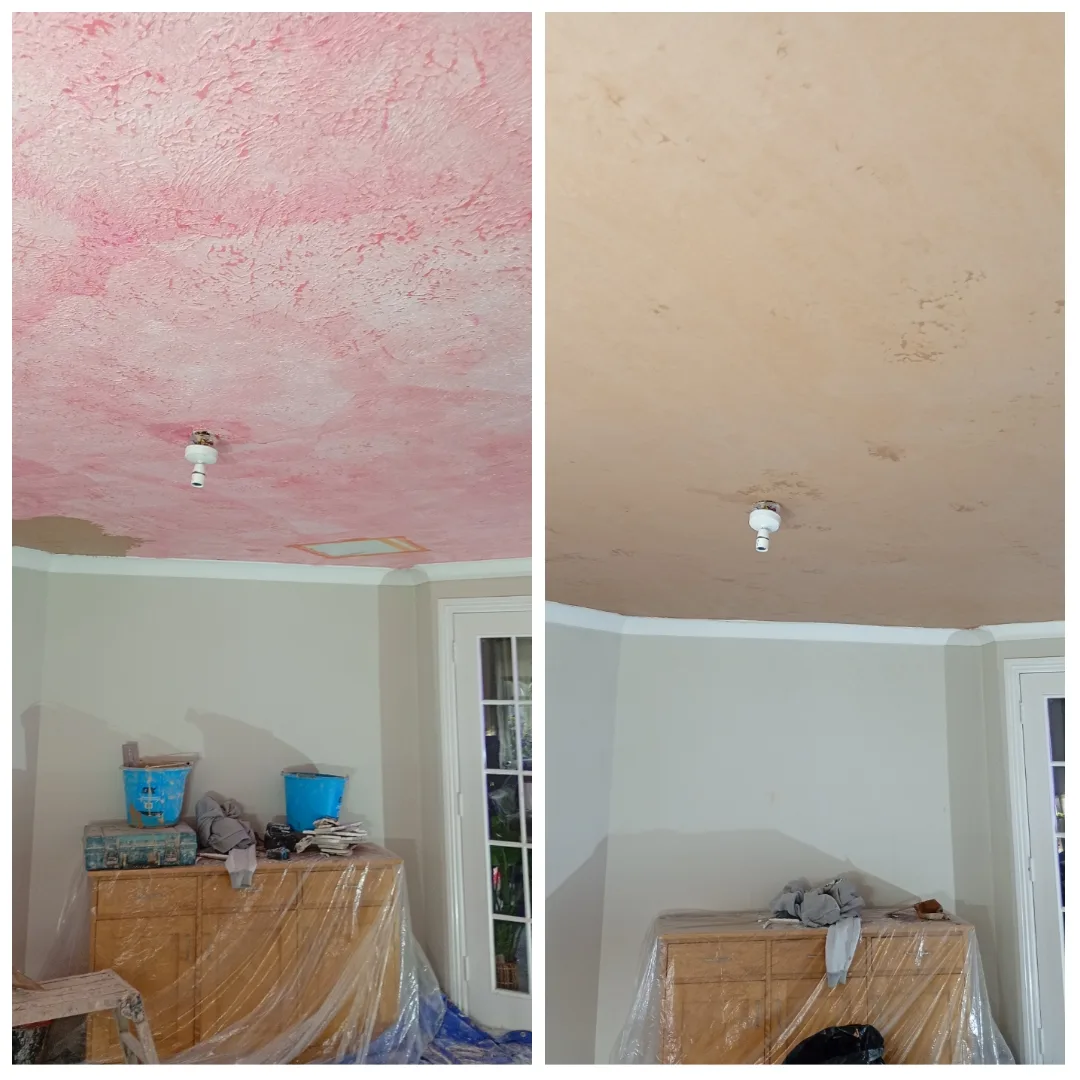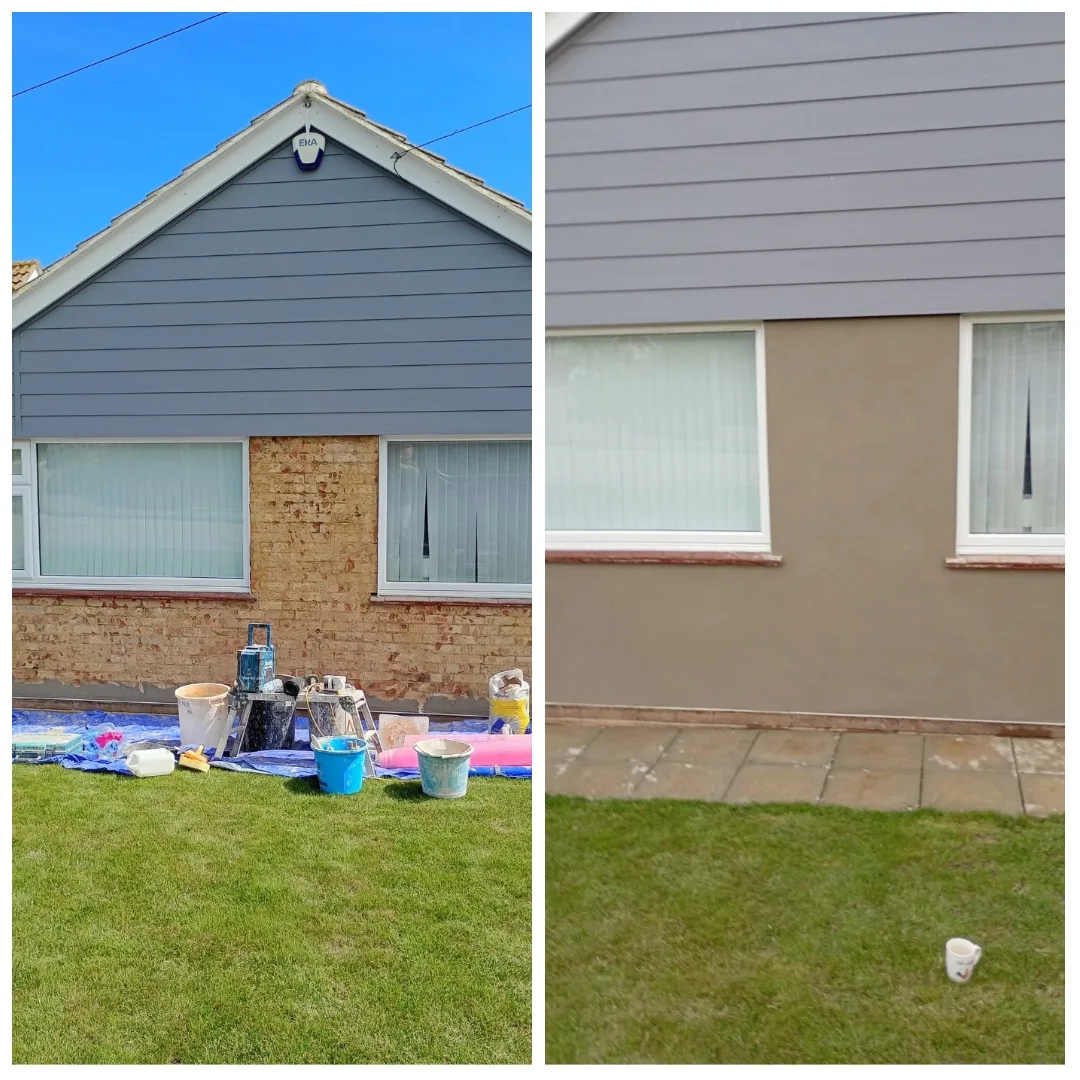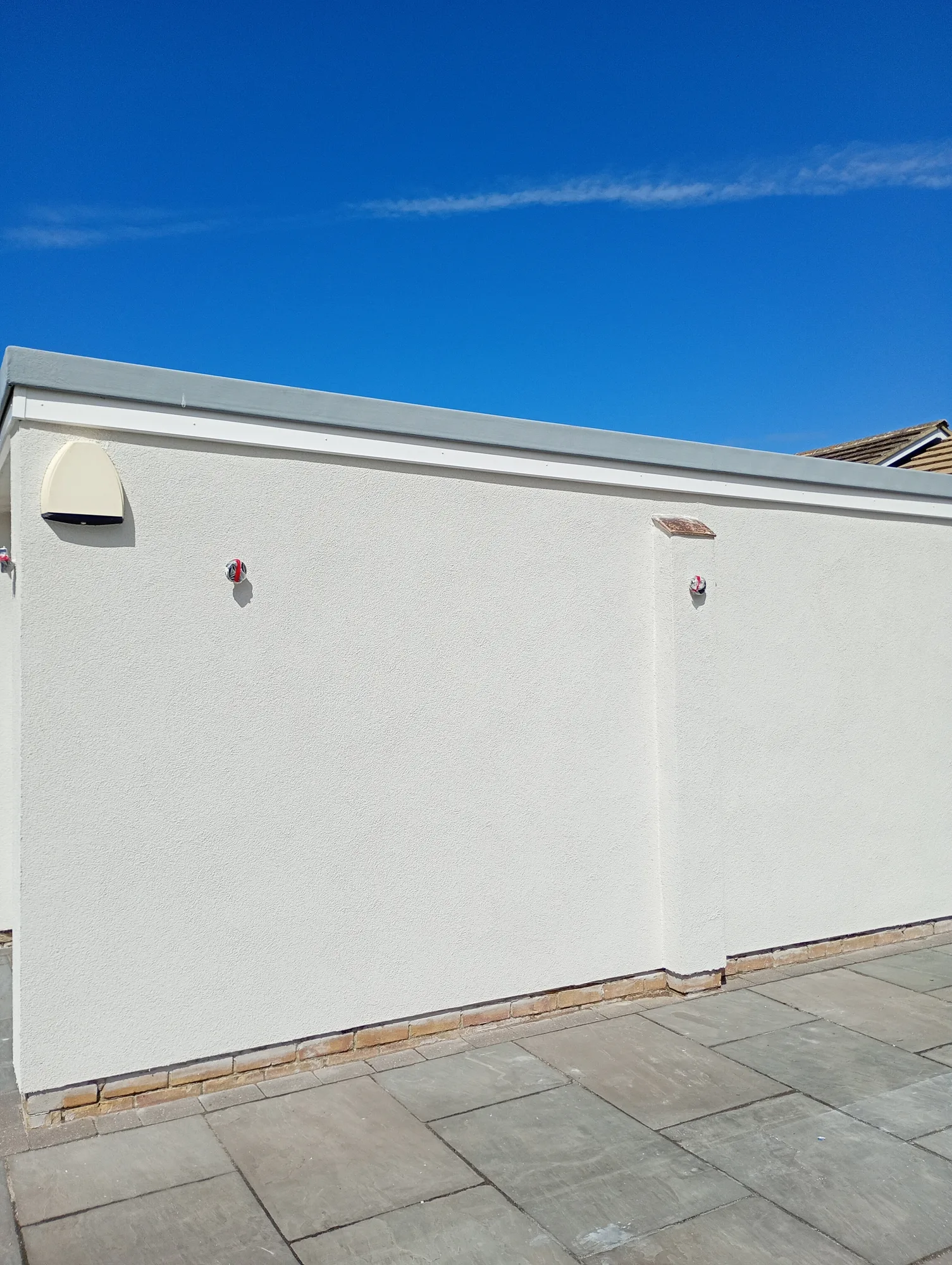
Coloured render comes in two main families: monocouche, a thick through-coloured render applied in one main coat, and silicone thin-coat systems applied over a basecoat. Both never need painting because the colour runs all the way through. Traditional sand and cement costs less upfront but needs painting and more maintenance. The right choice depends on your walls, exposure to weather, and budget.
Drive along the coast from Whitstable through Herne Bay to Margate and you can read the history of British rendering on the houses: tired grey sand and cement, painted finishes peeling in the salt air, and, increasingly, crisp through-coloured render that still looks fresh years after it went on. Coloured render has become one of the most popular exterior upgrades in East Kent, and for good reason, but the word "render" covers several very different systems. Choosing the right one for your walls matters far more than the colour chart, so let us start there.
The Three Main Render Systems
Almost every domestic rendering job comes down to one of three systems, each with its own strengths.
- Monocouche: a modern, cement-based render that comes ready-coloured in the bag and is applied thick, then scratched back to a fine, even texture. "Monocouche" just means "one coat", because it does the jobs of base coat and decorative finish in a single material. It is my speciality, and it suits most brick and blockwork homes. The colour runs all the way through, so it never needs painting.
- Silicone thin-coat: a flexible, silicone-based finish applied in a thin decorative layer over a reinforced basecoat with mesh. I work with EcoRend systems, and the results are superb: highly water repellent, breathable, self-cleaning to a degree, and flexible enough to resist cracking. It is the best choice where walls have hairline movement, over external insulation, and in exposed coastal spots.
- Traditional sand and cement: the old faithful, mixed on site and applied in two or three coats, then painted with masonry paint. It is the cheapest upfront and still has its place on repairs and matching existing finishes, but it is rigid, prone to hairline cracking, and the paint becomes a maintenance job every few years for the rest of its life.
Which one is right depends on your walls, your budget and how exposed the property is. That is a judgement made on a survey, not over the phone.
Why Through-Colour Never Needs Painting
The single biggest selling point of monocouche and silicone thin-coat systems is that the colour is not a coating sitting on the surface, it is the material itself. Pigment is mixed through the render, so there is no paint film to blister, peel or flake. Scuff it and the same colour is underneath.
That changes the economics of the job. Painted sand and cement looks cheaper on the initial quote, but add a repaint every five to eight years, with scaffold or access costs each time, and the through-coloured systems usually work out better value over the life of the render, quite apart from looking sharper in between. Once a through-coloured render is on, the ongoing "decorating" is essentially an occasional wash down.
Thinking About Rendering Your Home?
Call Tom at TG Specialist Plastering on 07885 477664. Free quotes across East Kent, and a colour sample booklet you can browse at your kitchen table.
Call for a Free QuoteRendering for Kent's Coastal Weather
East Kent is lovely to live in and hard on the outside of a house. Anywhere near the coast gets salt-laden air, driving rain off the sea, strong sun on south-facing elevations and plenty of wind. Render here has to do more than look good on day one.
- Water resistance: silicone thin-coat systems are strongly water repellent, so rain beads and runs off rather than soaking in. Monocouche is also formulated to shed water far better than plain sand and cement.
- Breathability: walls need to let moisture vapour escape. Both modern systems breathe, which helps keep the wall behind them dry and healthy. Trapped moisture is what kills renders and decorates your inside walls with damp patches.
- Flexibility: temperature swings between warm days and cold nights make walls move fractionally. Silicone renders flex with it; rigid sand and cement is the most likely to crack.
- Colour stability: quality through-coloured renders are UV stable, so a south-facing wall in Tankerton will not fade to a different shade from the sheltered north side.
Detailing matters as much as the material: bead choice, drips over openings, and how the render meets sills and the damp course all decide how a seafront wall copes ten winters in. This is where experience on local properties pays for itself.
Choosing a Colour You Will Still Love
The fun part, and the part people agonise over most. A few honest pointers from jobs across East Kent.
- Look at real samples outdoors: colours read completely differently on a screen, under showroom lights and on a wall in daylight. I carry a sample booklet so you can hold true colours up against your brickwork, windows and roof.
- Whites and off-whites are timeless and suit the coastal look, but a softened white or cream is usually kinder on the eye in bright sun than a stark brilliant white.
- Greys and stones are the popular modern choices and pair well with anthracite windows and doors.
- Think about the street: you do not have to match the neighbours, but a colour that fights the whole terrace rarely ages well.
- Remember it is long term: through-colour means no repainting, which also means you live with the choice. Pick the shade you will still be happy with in ten years, not just the one trending this season.
Hack Off or Patch Repair?
If your home is already rendered, the first question on any survey is whether the existing render can stay. Tapping the wall tells you a lot: a solid ring means the render is still bonded; a hollow drum sound means it has come away from the wall behind, or "blown".
- Patch and refinish works when: the existing render is mostly sound, with isolated cracks or small blown areas. These can be cut out, repaired and the wall refinished over the top.
- Hack off and start again when: large areas sound hollow, the render is cracked in maps, damp is getting behind it, or the old surface is too far gone to guarantee a bond. New render is only ever as good as what it is stuck to, so putting a premium finish over failing render is money wasted.
Hacking off costs more and makes a mess for a few days, but where it is needed it is the difference between a finish that lasts decades and one that fails early. I will always tell you straight which side of the line your walls fall on, and why.
Looking After Coloured Render
Modern coloured render is genuinely low maintenance, but low is not zero. A sensible routine looks like this.
- An annual once-over: walk round the house each spring and look for cracks, staining under sills or gutters, and any impact damage.
- Keep gutters working: most green streaks on render trace back to a leaking gutter or downpipe, not the render itself. Fix the leak and the wall stays clean.
- Gentle cleaning: a soft wash with low pressure lifts coastal grime and any algae in shaded spots. Avoid aggressive pressure washing up close, which can damage the surface texture.
- Deal with damage early: a small chip is a quick repair; leave water tracking behind the render through a winter of freezes and it will not stay small.
Do that much and a through-coloured render will keep a Kent home looking sharp for decades without a paintbrush in sight.
Frequently Asked Questions
Applied properly onto a sound wall, monocouche and silicone thin-coat systems are long-life finishes, and it is reasonable to expect decades of service with basic care. The two things that shorten a render's life are poor preparation underneath it and water getting behind it, which is why the survey and the detailing matter as much as the finish coat.
Sometimes. If the existing surface is well bonded and sound, a thin-coat system over a levelling basecoat can work well. If large areas sound hollow when tapped, the old render needs to come off first, because any new finish is only as strong as the layer it sits on. This is exactly what a free survey establishes before you get a price.
Spring to autumn is ideal. Render should not be applied in frost, and very hot direct sun or heavy rain during curing can affect the finish, so a professional plans the work around the forecast and shades or sheets the wall where needed. In practice, rendering happens most of the year in Kent, with the coldest weeks avoided.
It depends on the wall area, the system chosen, the condition of the existing surface (patching is cheaper than hacking off and starting again) and access, such as whether scaffold is needed. Rather than guess from averages, get a proper price for your own walls: quotes are free and itemised, so you can see exactly what you are paying for.